
Traditional Tools
Tools for Craftsmen
I have long been interested in the tools used by historical craftsmen and the ways those tools shaped the work they produced.
The tools shown here are intended for practical use rather than display. They include axes, adzes, draw knives, hold fasts, carving tools, dividers, and other equipment inspired by historical examples. While traditional forms provide the starting point, I am not opposed to making small adjustments when they improve performance or usability. Good work begins with good tools, and I enjoy producing tools that will spend their lives in workshops rather than on shelves.
To view more details on each item please click on the image to view the full description.
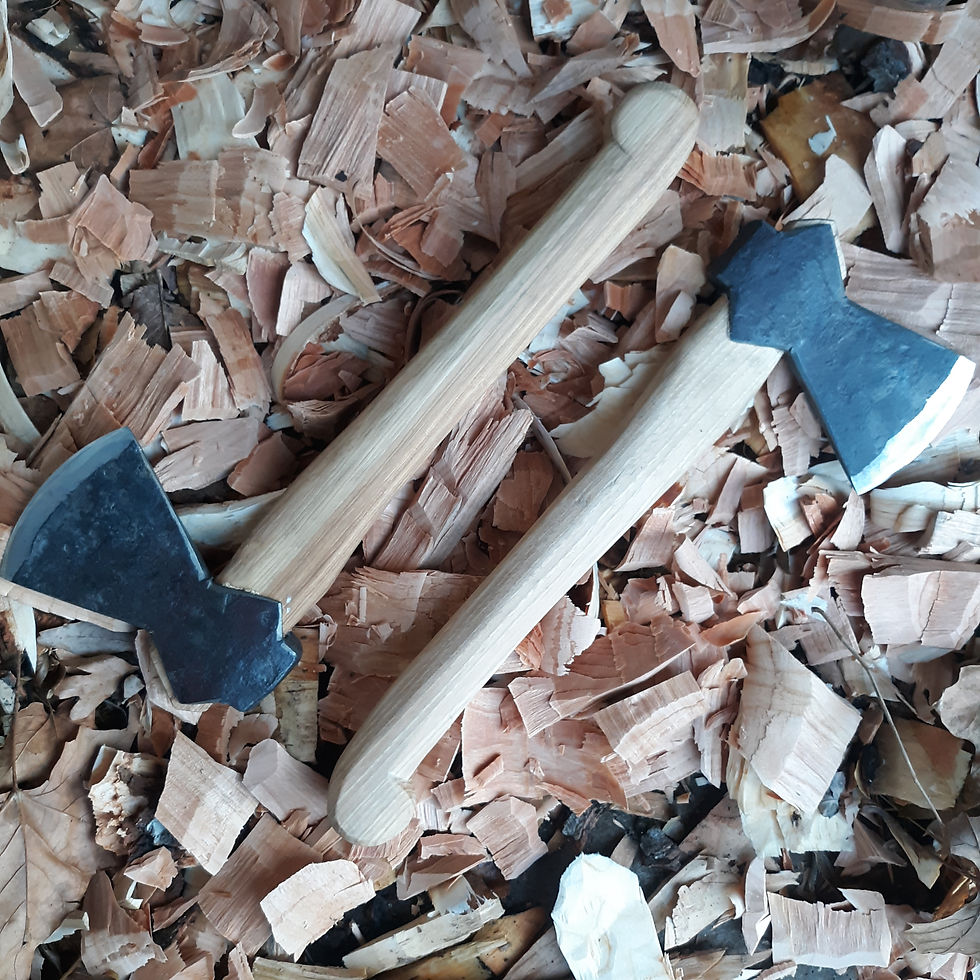
This axe is patterned after one found in an 18th century Gentleman's tool chest and is an ideal bench axe, suitable for shaping components in the workshop. All my axes are forged from repurposed wrought iron, wrapped and forge welded to form the eye, with a high carbon steel bit. I hand make every handle and sheath as well, both of which are included with the purchase.

This axe is a perfect companion for camping and brush work. The handle is a little longer than a bench or carving axe, which is ideal for limming or knocking down stock to rough dimensions All my axes are forged from repurposed wrought iron, wrapped and forge welded to form the eye, with a high carbon steel bit. I hand make every handle and sheath as well, both of which are included with the purchase.

Wrought Iron & 1095, Hung on Hickory
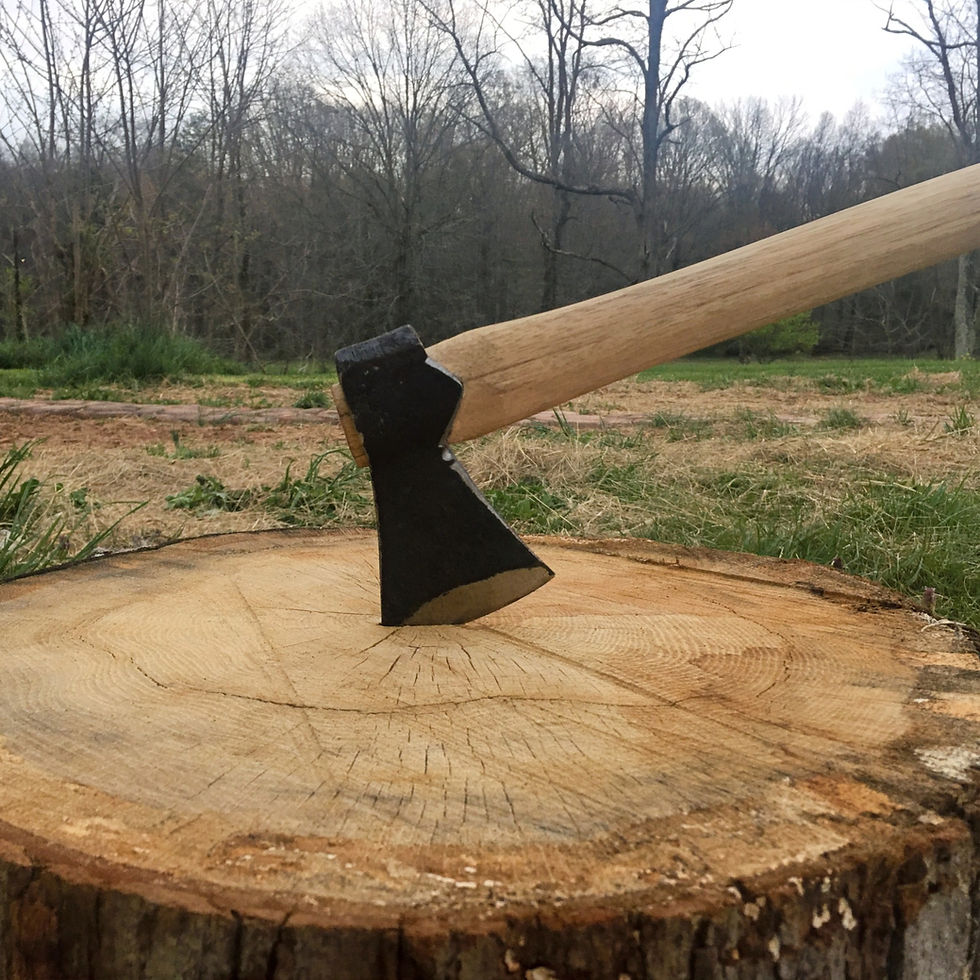
Small and mighty chomper is light enough for back packing, but stout enough you won't be asking for more. Hand forged from reclaimed wrought iron with a wrapped eye and forge welded 1095 carbon steel business end. Lense-shaped cross section () instead of flat || like modern axes. Hung on Hickory, Black Locust, or White Oak depending on availiblity.

Modern wedges are a pain in the neck (literally) to get started, being industrally cast or forged they're just too blunt and thick. These are designed to get a run started, followed by a heaver wedge to pry the split open, so you can get back to work instead of chasing your wedge across the yard.

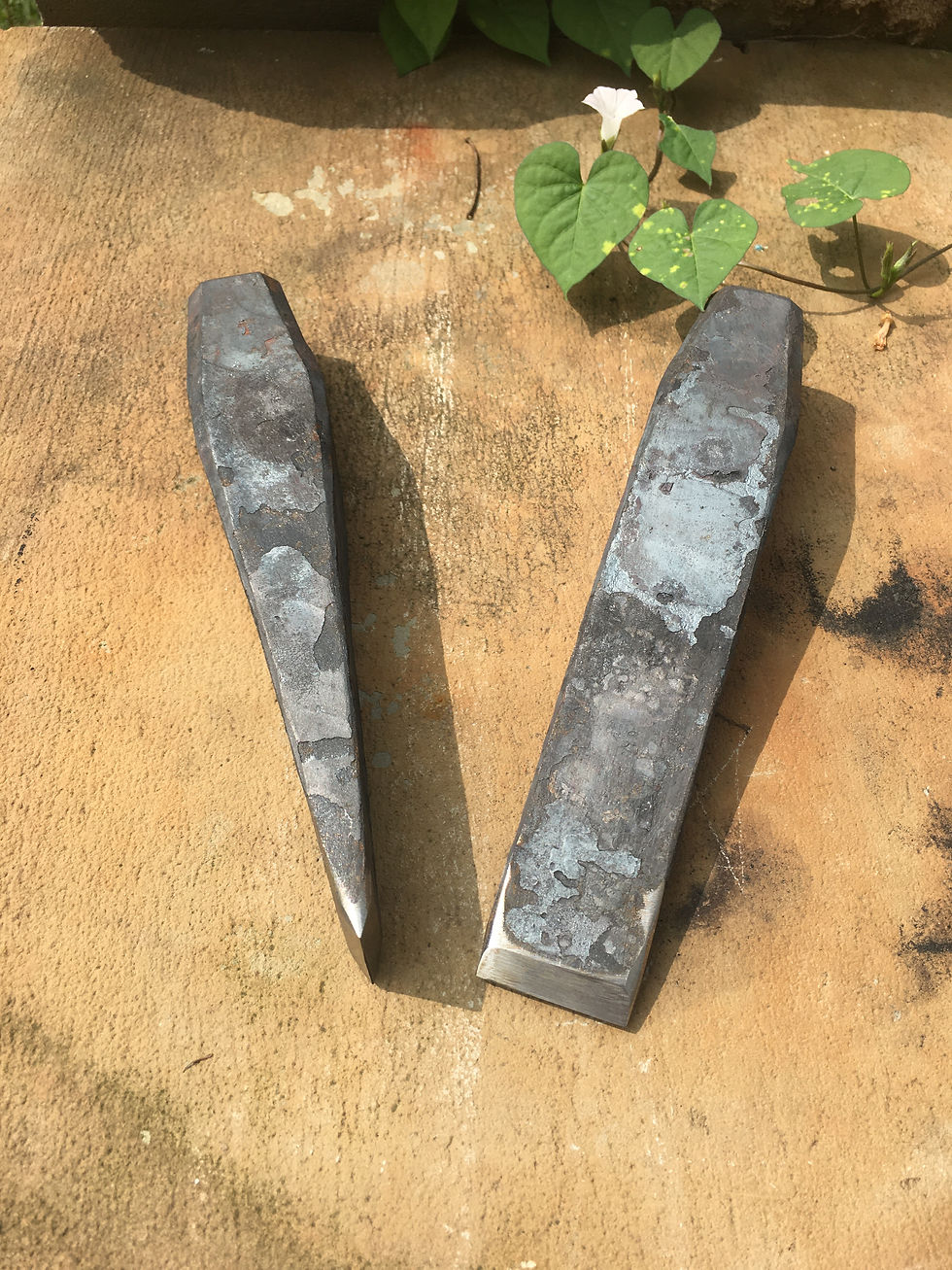
After a log has been breached with a Starter Wedge, these Breaching Wedges are ideal for opening that split up after it's been started. Dimensions are about 1-1/4" SQ at the boss, 7" Long

Forged from case-hardened mild steel, these froes are perfect for breaking down stock to usable blanks. Most other froes have a 1/4" or 3/8" spine, usually with flat sides and only a beveled edge. I forge these with a 1/2" Spine and fully wedged shape so the tool itself initiates the cleft, and prying just runs the split out. I hand carve each handle, from White Oak, Black Locust or Hickory depending on availibility

These punches are patterned to recreate the same tool markings found in 17th Century carved woodwork and are modeled after those used by Peter Follansbee in his work. The reamer is forged from tool steel and has sharpened edges. Used for piering starting holes for nails, enlarging drilled holes, or helping to align draw-bored holes in joinery. Also avaiblible with handle.

These Firmer Chisels are reproductions from mid 18th century. They are bench chisels used primarily for pairing and fitting joinery. They are constructed from period appropriate wrought iron, W1 steel, and beech handles. Size - blade length 1/4 - 4.5" 3/8 - 5" 1/2 - 5.5" 3/4 - 6" 1 - 6.5" Custom sizes available upon request

Curved Adze for hollowing bowls, Availible in both a "Heavy" or "Light" pattern All my axes are forged from repurposed wrought iron, wrapped and forge welded to form the eye, with a high carbon steel bit. I hand make every handle and sheath as well, both of which are included with the purchase.

Bent Bowl Gouge, approx 1-1/4" wide. Full socket allows for a stronger handle connection than the tang models commonly availible, allowing for both struck and hand pressure action. Body forged in wrought iron with a laminated high carbon steel bit. Turned Beech Handle.

Serious chisel for serious mortises. Socketed construction with long bevel for chip breaking. Turned beach handle. Traditionally forged from reclaimed wrought iron with 1095 forge welded business end. 6-7" long business end for deep mortises. Slightly back tapered to clear walls of mortise. Please indicate desireed with: This is a good size for 1/2", 5/8" and 3/4" mortises. I will make them larger upon request, but 7/8"+ mortises are usually bored for stock removal and cleaned up with

Forged from reclaimed wrought iron with a 1095 edge, these drawknives are thicker than commerical ones, allowing for good chip-breaking action. Cutting edge is 10", other sizes available on request. Turned Black Walnut handles


Low profile holdfast 3/4" Tapered shank 6" Scale for Reference

Toothed Planing Stop/Bench Dog Shank: 3/4" SQ or to your specifications (may also be made with a spike for a wooden block)

For over a hundred years pliers and similar tools have been made with a lap joint: these pliers are patterned after historical Watch and Clock Maker's tools with a captured pass-through forming a "Box Joint", so any gripping/prying stress is placed on the body of the tool, and not the pin in the joint. Custom Jaws availible upon request

Three-leaf friction dividers, available in any length. Filed Bright

Great for splitting out pegs and cleft-stock splitting applications (like tenon shoulders), these 6" cleavers are a nice way to score long cuts. Spine is 1/2" wide, tapered in cross section. Based on one used by Peter Follansbee.